Our strategy

Payments for environmental services
Canopy Trust implements the standardized, centralized PES approach developed by CAFI, incentivizing communities and landowners to preserve forest ecosystems.
PES is results-based, paying for verified deliverables in terms of new agriculture and agroforestry plantations. By acting directly at the community level through PES-supported plantations, Canopy Trust contributes to derisking private-sector processing. This boosts efficiency and creates added value, paving the way for unique partnerships and deforestation-free value chains.
Technical assistance and direct investment
Canopy Trust provides technical assistance, grants, and concessional equity/debt to support early-stage projects in their initial stages of development. These financial tools target projects and companies working on solutions to stop deforestation.
This approach enables the development of proof-of-concepts that can then be scaled up, creating a pipeline of bankable projects. It complements traditional investments by providing catalytic funding to de-risk projects.


Fund investments
Canopy Trust provides junior tranches through partnerships with existing funds and asset managers.
Using a blended finance approach, Canopy Trust deploys concessional capital to de-risk and catalyze significant additional private sector investments in sustainable agriculture and forestry, cooking energy, renewable energy, and deforestation-free agricultural value chains.
Strategy of Canopy Trust
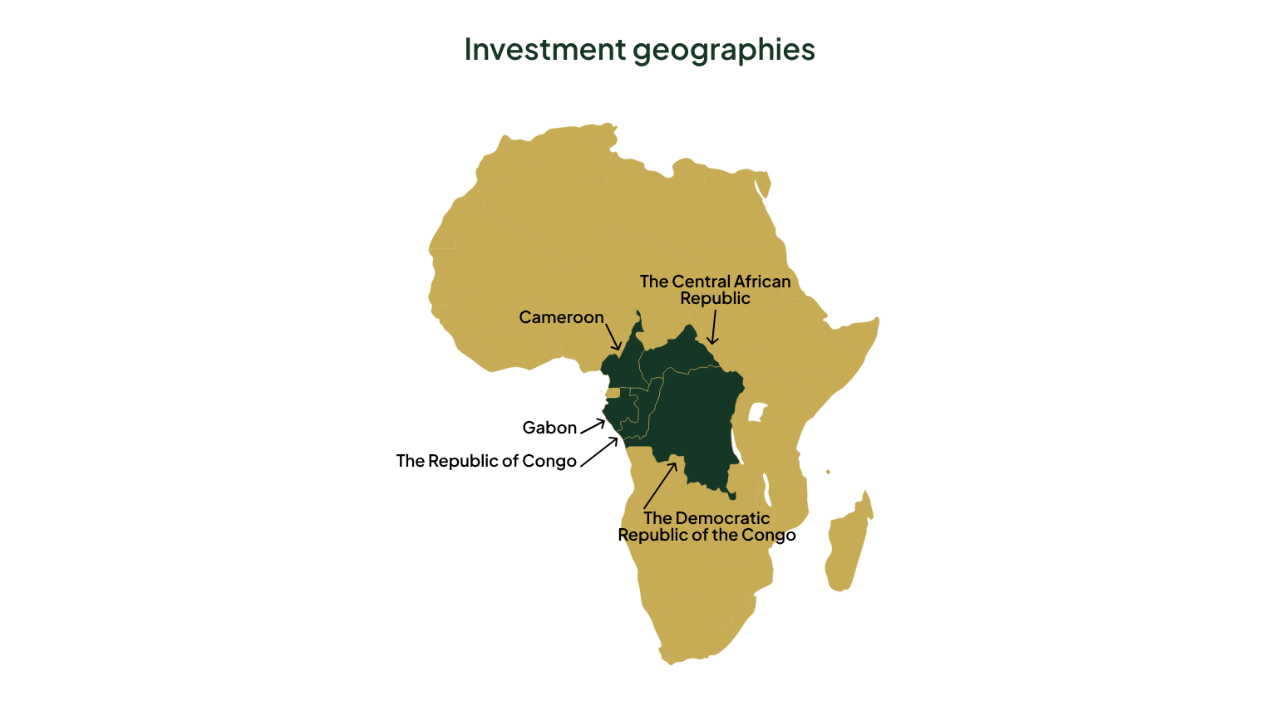
Investment Sectors
Sustainable agriculture, agroforestry and forestry
- Deforestation-free agribusiness
- Smallholder farmers projects
- Agroforestry companies
- Sustainable forest management and forest concessions
- Landscape-level conservation finance mechanisms including REDD+ and nested REDD programmes
- Integrated agriculture and forestry projects
- Verification and traceability technology enabling deforestation-free supply chains.
Sustainable cooking and renewable energy
- Clean cooking solutions including improved cookstoves and advanced biomass solutions
- Sustainable charcoal alternatives, such as agricultural-residue briquettes and sustainable charcoal value chains
- Waste to energy
- Clean energy infrastructure
Processing and transformation
- Deforestation-free and climate-positive value chains
- Sustainable processing and transformation infrastructure
- Inclusive rural enterprises and market-linkage platforms
- Ecotourism and nature-based enterprises, with forest conservation outcomes
- Financial intermediaries and microfinance institutions supporting smallholder, or women-led enterprises
- Digital and tech-enabled solutions that strengthen value chain traceability or market access
- Sustainable economic alternatives for forest-dependent communities